Summer in Newark has a specific, heavy rhythm. If you walk through downtown, cross under the shadows of towering office buildings, or navigate the dense industrial stretches of the Ironbound, you don’t just feel the sun—you feel the city itself radiating heat back at you from every direction.
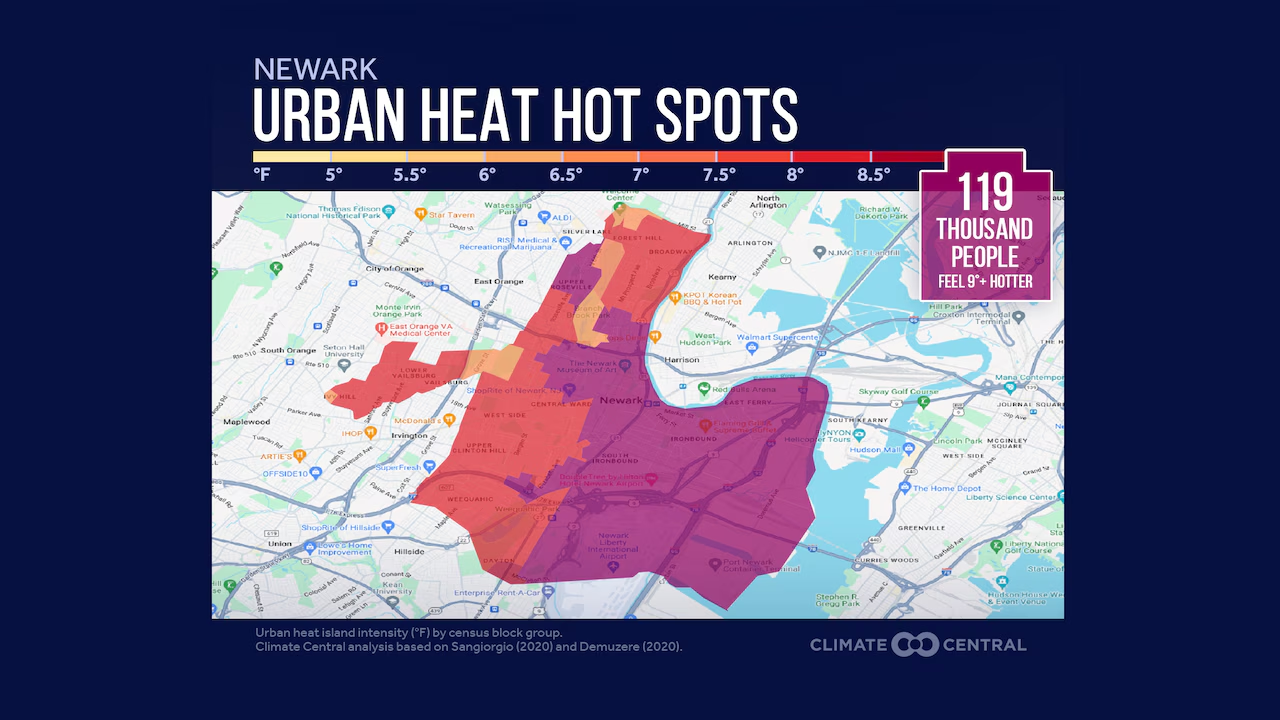
According to climate modeling from Climate Central, the Newark Urban Heat Island (UHI) intensity ranks third highest in the nation per capita. The built environment adds an average of 9.0°F to our baseline summer temperatures. On a day when the regional forecast calls for 90°F, sections of the Brick City are actually enduring a blistering 99°F. Even more alarming: 97 percent of Newark’s population lives in a census block where asphalt, concrete, and dark infrastructure trap heat at dangerous levels. This isn’t simply a weather story; it’s an infrastructure story, an economic equity story, and a public health crisis.
Today, Mayor Baraka and Chief Sustainability Officer Nicole Hewitt-Cabral announced the launch of Heat Safe Newark in conjunction with Heat Action Day, a global campaign of the Federation of Red Cross and Red Crescent Societies held annually on June 2. The program, led by the Newark Office of Sustainability, Resilience & Community Transformation (OSRCT), is a comprehensive citywide initiative designed to protect residents from the growing dangers of extreme heat while building cooler, healthier, and more resilient neighborhoods across Newark.
How Newark Became a Heat Trap
Urban Heat Islands don’t develop by accident; they are the physical blueprint of a city’s industrial history. Newark developed as a powerhouse of manufacturing, transit, and logistics. Decades of paving over natural landscapes to build transportation corridors, dense industrial parks, rail yards, and surface parking lots created a landscape dominated by dark asphalt and concrete that absorb up to 90 percent of solar radiation.
Combined with historical redlining and chronic disinvestment in urban forestry, neighborhoods like the North and South Ironbound, Lower Clinton Hill, and the areas surrounding Port Newark were left with expansive grids of continuous concrete and almost no protective tree canopy.
“Newark experiences some of the highest summer temperatures in the region, with heat concentrated in neighborhoods that have limited tree canopy, dense building patterns, and large areas of dark, heat-absorbing surfaces like rooftops and parking lots,” said Mayor Baraka. “As climate change continues to increase temperatures and intensify heat waves, Heat Safe Newark will not only enhance residents’ enjoyment of the summer months, but will improve their health year-round and into the future, as we implement a broad range of strategies and investments designed to reduce temperatures, expand access to cooling resources, and boost community resilience.”
Cooling the Built Environment: Newark’s Battle Plan
“Extreme heat is often called a silent killer because its impacts can be devastating, yet easily overlooked,” said Hewitt-Cabral. “In Newark, we are taking proactive steps to address this growing threat by raising awareness, equipping residents with practical heat-safety strategies, and investing in long-term solutions that make our neighborhoods cooler, healthier, and more resilient. Through Heat Safe Newark, we are working to ensure that every resident has the knowledge, resources, and support needed to stay safe during periods of extreme heat. Whether it’s finding shade, staying hydrated, checking on vulnerable neighbors, or learning about cooling resources, small actions can save lives.”
Heat Safe Newark will expand Newark’s urban canopy and neighborhood green spaces through “Rooted in Newark” street tree planting and microforests. Heat-reducing infrastructure improvements will include “Cool Roofs Newark” which treats rooftops with reflective paint to lower buildings’ temperature, shaded parking lots, cool turf installations, playground shade structures, and misting stations throughout Newark.
We cannot simply bulldoze our infrastructure, but we can transform it. Through local organizing, state funding, and municipal strategy, the city is deploying systemic solutions to alter its physical footprint:
Turning Roofs White: One of the fastest ways to lower a building’s internal temperature is changing the color of our skyline. The city’s Cool Roofs Newark initiative coats municipal and community serving rooftops with a highly reflective white material, dropping roof temperatures by up to 16 degrees while providing paid green workforce training to Newark residents.
Radical Reforestation: Trees are nature’s air conditioners. Backed by multi-million dollar federal and state forestry grants, organizations like the New Jersey Tree Foundation and the Newark Tree Canopy Initiative are actively working to expand the city’s urban canopy, targeting overburdened neighborhoods to permanently lower street level temperatures.
Creating Climate Resilience Hubs: In March 2026, the New Jersey Board of Public Utilities, backed by the environmental resilience milestones pushed under Governor Mikie Sherrill’s administration, awarded major funding through its UHI Mitigation Program. This includes a maximum $500,000 grant to fully redevelop Firefighters Memorial Park into a climate resilient community cooling space complete with shade structures, emergency cooling amenities, and hydration stations, alongside localized micro-climate grants for community groups like Newark SAS and Rabbit Hole Farm.
Recycling the Dollar, Restoring the Canopy
Mitigating extreme heat requires the same principle we advocate for in economic development: keeping assets local. When we invest in urban greening and cool roofs, we aren’t just lowering temperatures—we are lowering energy bills for families, reducing strain on our local electrical grid, and building local green infrastructure jobs that keep Newark dollars recycling right here within our community.
Transforming Newark from a top-three heat island into a cooler, more resilient city won’t happen overnight. It requires a sustained, block-by-block effort. But by reclaiming our public spaces, expanding our tree canopy, and treating climate resilience as an economic opportunity for our residents, Newark can take the heat and change the blueprint.