As Port Authority Opens Review on $10.3B Budget, Key Questions Emerge for Newark
By The Newark Times Staff
NEWARK, NJ — The Port Authority of New York and New Jersey has opened the public-review window on its proposed $10.3 billion budget for 2027, giving Newark residents until December 15 to weigh in before the Board of Commissioners votes on December 17.
While the headline figure signals massive regional spending—split into $4.5 billion for operations, $4 billion for capital construction, $1.7 billion for debt service, and $100 million in deferred expenses—the budget blueprint treats the bi-state agency’s assets as a single regional balance sheet. Because Newark hosts three of the agency’s most vital economic engines—Newark Liberty International Airport, Port Newark, and the western terminus of the PATH system—a large regional total does not automatically guarantee a proportional local return.
As the public comment period begins, how can residents evaluate what this spending plan actually delivers for the city? Looking closely at the budget’s line items raises several concrete questions about project-level funding, construction schedules, and local employment opportunities.
Airport Modernization and Neighborhood Ground Access
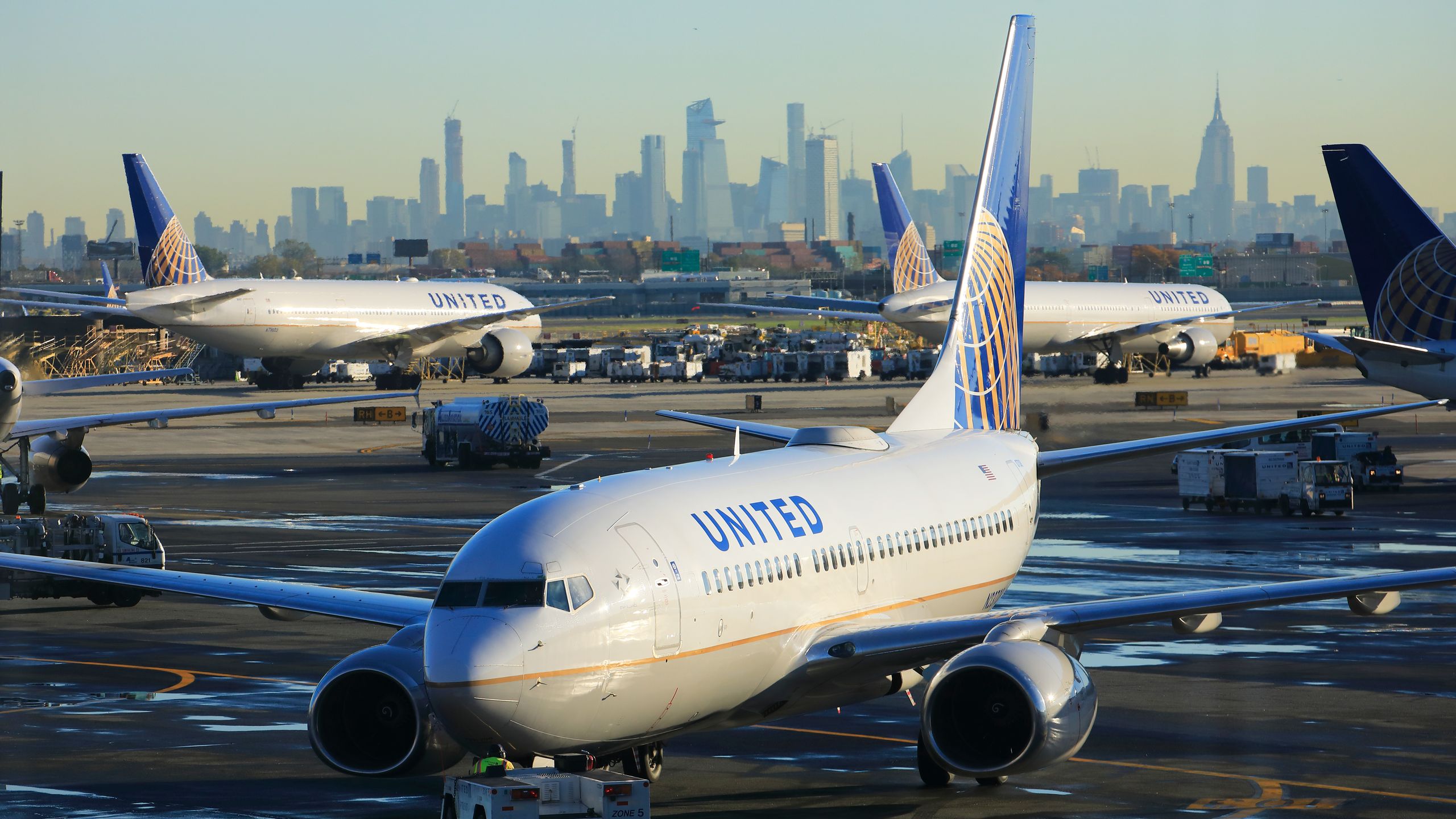
At Newark Liberty International Airport (EWR), the 2027 budget advances ongoing construction on the replacement AirTrain system, moves forward with planning and design for a new Terminal B and a Terminal A gate expansion, and funds the first full year of operations for a new community access point at the Newark Liberty International Airport Train Station.
For decades, South Ward and Dayton neighborhood residents lived alongside one of the busiest air hubs in the country without direct pedestrian or local transit access to its rail station, forcing airport workers and travelers onto congested local roadways or circuitous bus routes. The new station entry point—connecting AirTrain Newark, NJ TRANSIT, and Amtrak—is designed to open direct transit access to adjacent neighborhoods in Newark and Elizabeth.
As these projects move forward, what should Newark residents look for regarding airport ground access?
- Will improved rail access be paired with concrete measures to manage local street-grid congestion, rideshare staging, and airport traffic spilling into surrounding neighborhoods?
- With AirTrain fare increases scheduled for 2027, will the new station entry point remain affordable for low-wage airport shift workers commuting from the South Ward and across the city?
Port Newark and the Logistics Economy
The Port of New York and New Jersey remains the busiest container gateway on the East Coast, projected to move 9 million twenty-foot equivalent units (TEUs) in 2027. To keep freight moving, the proposed budget allocates $21 million in operating funds for channel maintenance dredging, alongside capital investments to replace public berths at Port Newark, continue wharf rehabilitation, and advance the Port Street Corridor Improvement project.
Those investments sit at the center of Newark’s industrial and logistics economy. Modernizing the Port Street corridor is intended to untangle chronic truck bottlenecks where port drayage traffic meets city streets and highway interchanges—a critical factor for both supply-chain efficiency and air quality in the East Ward and Ironbound.
Because port capital spending in the budget is grouped across multiple bi-state maritime facilities, two questions stand out for Newark’s logistics corridor:
- How much of the $4 billion regional capital pool is specifically earmarked for Newark’s public berths, wharves, and the Port Street Corridor, rather than aggregated across New York and New Jersey marine terminals?
- What are the exact completion timelines for Port Street roadwork, and how quickly will those improvements reduce diesel truck idling and congestion near residential streets?
PATH Rail: Service Gains Amid a Capital Dip
For daily commuters and shift workers traveling between Newark Penn Station, Harrison, Jersey City, and Manhattan, the 2027 budget presents a mixed picture. Following the 2026 completion of the two-year, $430 million “PATH Forward” modernization program—which enabled seven-day-a-week service across all lines—the Port Authority plans to increase peak and weekend train frequencies on the Newark–World Trade Center line in 2027. The 2027 proposal also funds construction on PATH’s new Substation No. 2 in downtown Jersey City and supports Amtrak’s rehabilitation of the Dock and Sawtooth bridges along the Northeast Corridor approach to Newark.
At the same time, overall PATH capital spending is slated to drop 20 percent, from $292 million budgeted in 2026 to $233 million in 2027, even as riders face previously approved annual fare hikes climbing toward $4 by 2029.
For Newark riders who rely on PATH as a primary transit link to jobs across the region, the budget prompts two immediate considerations:
- How soon in 2027 will increased peak and weekend train frequencies take effect on the Newark–World Trade Center line?
- As PATH capital spending decreases by $59 million year-over-year, will ongoing maintenance funding be sufficient to prevent signal and power delays while riders pay higher fares?
Questions for the Public Comment Period
Because the Port Authority operates without state or local tax dollars—relying instead on tolls, fares, lease revenues, and $1.1 billion in planned 2027 bond issuances—Newark does not receive a fixed municipal share of the $10.3 billion budget. Major projects in New York, including JFK’s Terminal 1, the Midtown Bus Terminal replacement, and infrastructure at 2 World Trade Center, draw from the same $4 billion capital pool.
| Budget Category | 2027 Proposed Allocation | Key Newark Impact |
|---|---|---|
| Operating Expenses | $4.5 billion | Includes $21M for port channel dredging, first full year of EWR Train Station community access operations, and 120 new PAPD cadets. |
| Capital Construction | $4.0 billion | Advances EWR AirTrain replacement, Terminal B design, Terminal A gate expansion, Port Street Corridor work, and $233M for PATH (down 20%). |
| Debt Service & Deferred | $1.8 billion ($1.7B debt / $100M deferred) | Supported by user fees, leases, $1.1B in planned 2027 bonds, and scheduled 2027 increases in tolls, PATH fares ($3.50 on Jan. 3), and AirTrain fares. |
Before the Board of Commissioners votes on December 17, readers considering submitting public comments may want to press the agency on three core points:
- Project-Level Funding: Will the Port Authority publish itemized dollar allocations for Newark’s Terminal B design, the new AirTrain, Port Newark public berths, and the Port Street Corridor rather than grouped regional totals?
- Binding Schedules: What are the specific quarterly milestones for the full operation of the Newark Airport Train Station community access point, Port Street roadwork, and Newark–WTC train frequency increases?
- Local Employment Opportunities: What enforceable hiring targets, union apprenticeship pathways, and local contracting goals will connect Newark residents to the budget’s major capital construction contracts—as well as to the 120 new Port Authority Police Department (PAPD) cadet slots funded for 2027?
Members of the public can submit formal comments on the proposed 2027 budget through the Port Authority’s website through December 15, 2026.